Old and New in the Same Frame
Kyoto is all about balance. It’s the ancient capital of Japan, home to over a thousand temples, but it’s also modern life done right. You’ll walk past a 14th-century gate and two minutes later see someone gliding by on an electric scooter with a coffee from %Arabica.
And it doesn’t feel wrong. The mix just works. The city’s beauty is in those contrasts – a salaryman bowing to a monk at a street crossing, a vending machine humming next to a 400-year-old teahouse. It’s living history that hasn’t been frozen.
Temples, Shrines, and the Sound of Silence
There are so many temples in Kyoto you stop trying to count. The big ones everyone knows – Fushimi Inari with its endless red gates, Kinkaku-ji the Golden Pavilion shining in sunlight, Ginkaku-ji the Silver Pavilion that’s not even silver but somehow more beautiful for it.
But the real Kyoto happens in the smaller, quieter spots. Ryoan-ji with its rock garden that looks like nothing and everything at once. Or Honen-in, hidden in the woods, where the moss feels like it’s breathing.
You sit, you watch, you think about nothing, and somehow that’s exactly the point. Time bends a bit in these places.
Sometimes you’ll hear a monk’s chant drifting through the air, or just wind in the bamboo. You start to notice tiny things – the way sunlight hits a gate, the crunch of gravel under shoes. It’s like the city teaches you to see again.
The Seasons Rule Everything
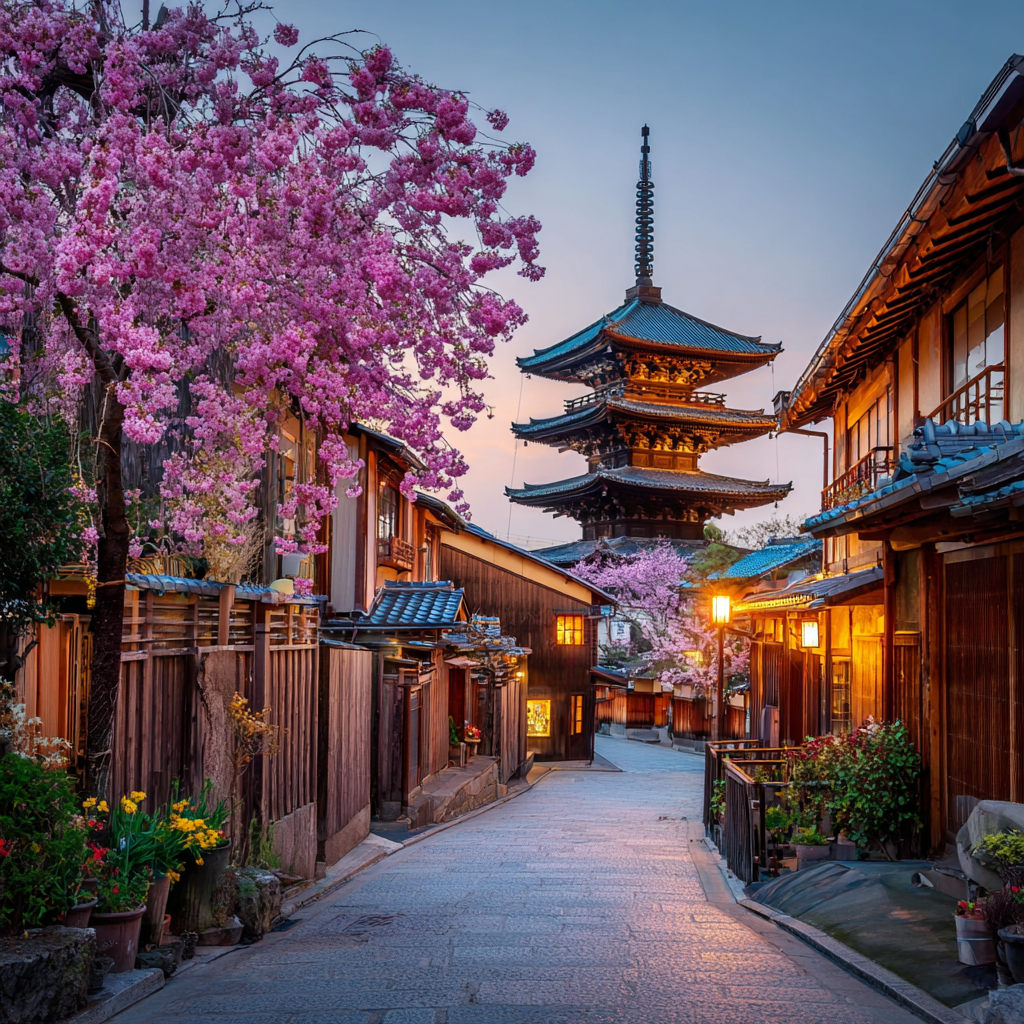
Kyoto changes completely with the seasons. Spring is pink, soft, romantic – cherry blossoms over the Kamo River, petals falling like snow. Locals picnic under the trees, tourists take a thousand photos, and for a few weeks the city feels almost unreal.
Then summer comes, and it’s hot, humid, alive. Cicadas scream from the trees, festivals fill the streets, and everyone moves slower because of the heat. The Gion Matsuri in July is huge – floats, drums, lanterns, food stalls selling grilled squid and cold beer.
Autumn, though, might be the best. The air turns sharp, temples glow in red and gold leaves, and even locals still gasp like it’s new every year. Then winter, quiet and pale. Snow dusts the temple roofs, steam rises from onsen baths, and Kyoto feels like it’s whispering again.
Each season is its own version of the city. You can visit four times and see four different places.
Gion – Ghosts and Geisha
Everyone comes to Kyoto wanting to see a geisha. In Gion, the old entertainment district, it’s still possible – barely. Around dusk, if you’re lucky and patient, you might see one glide out from a wooden house, white-faced and perfectly still except for the movement of her hands.
They’re not there for show; they’re still working. Real geiko and maiko (apprentices) heading to evening appointments. People chase them with cameras, but the respectful travelers just stand back and watch.
Gion itself feels like time folded over. Narrow alleys, paper lanterns, wooden lattice houses. At night it glows with a warm gold light, and the sound of sandals on stone echoes like it’s coming from another century.
There’s beauty here, but also discipline. The whole geisha world runs on silence, training, and grace – an art form that survived everything modern life threw at it. Kyoto is full of those small acts of preservation that somehow keep the soul of the city alive.
Food – Simple, Quiet, Perfect
Eating in Kyoto is a ritual. It’s not about big flavors or showy plating. It’s about balance, presentation, seasonality. Everything has a meaning here, even how it’s placed on the plate.
Start with kaiseki, Kyoto’s signature fine dining. Multi-course meals where each dish feels like a small piece of art. A slice of sashimi, a bite of tofu, a tiny flower placed just so. It’s slow, expensive, unforgettable.
But Kyoto also nails simplicity. Try yuba (tofu skin) in a small family-run restaurant near Nanzen-ji. Or obanzai, traditional home-style dishes served in little bowls – eggplant, pickled daikon, simmered pumpkin. It’s comfort food made with centuries of practice.
And then there’s tea. Uji, just outside the city, grows some of the best green tea in Japan. You can visit a teahouse where the matcha is whisked fresh, thick and slightly bitter, served with a sweet to balance it. Even if you don’t “get” tea, you will after that.
Coffee culture’s strong too. Spots like Weekenders Coffee or Kurasu roast their own beans, hidden in quiet corners where you can sit and watch the city breathe.
Hidden Corners and Local Life
Kyoto isn’t about ticking off landmarks, it’s about wandering. Getting lost a little.
Walk along the Philosopher’s Path, a canal lined with cherry trees, and you’ll pass tiny shrines and cats sleeping on stone walls. Go to Nishiki Market and eat everything – fried tofu, sesame mochi, pickled cucumbers on sticks.
Take a bike and ride by the river in the evening, when the light turns soft and gold. You’ll see couples sitting on the embankment, old people fishing, teenagers playing guitar. No one’s rushing anywhere.
Locals are polite, reserved, but kind. They’ll help if you’re lost, though probably with shy smiles and gestures more than words. Learn a few basics – arigato, sumimasen, it goes a long way. Kyoto runs on respect.
Tradition in Motion
One of the most fascinating things here is how old crafts still live. You can visit workshops where people make wasai (hand-sewn kimonos), kyo-yuzen (silk dyeing), or kintsugi (repairing pottery with gold). These aren’t museum shows – they’re real working studios.
Young artisans are returning to Kyoto, finding ways to mix tradition with new design. There’s a quiet revival happening, a new kind of pride in handmade things.
Even the modern art scene feels rooted in this old patience. Galleries like Kyoto Art Center or HOSOO Gallery mix innovation with history. Nothing feels out of place – everything connects somehow.
When Night Falls
Kyoto at night is softer, more mysterious. The crowds disappear, and the streets of Pontocho glow like lanterns floating in the dark. You can hear the river, the laughter from izakayas, the clink of glasses.
Pontocho is a narrow alley running parallel to the Kamogawa River. Tiny bars, restaurants, and jazz spots squeezed side by side. Some so small they fit only five people. Step into one and you’re instantly part of the scene.
Try a local sake, or a whiskey highball, and talk with whoever’s next to you. Kyoto nights have this intimacy – you don’t need loud music or flashing lights, just soft voices, good drinks, and time.
Leaving Kyoto, But Not Really
The strange thing about Kyoto is it stays with you after you leave. You’ll catch yourself missing small things – the smell of tatami mats, the sound of the river at night, the calm rhythm of walking through temple gates.
It’s a city that doesn’t change fast, but it changes you. It teaches patience without saying a word. You start to move slower, notice details, appreciate quiet moments.
When you look back, you realize Kyoto isn’t about what you saw – it’s about how you felt while seeing it.
You can visit Tokyo for energy, Osaka for fun, but Kyoto… Kyoto’s for reflection. For remembering that stillness is also a kind of movement.
So you leave, but not completely. A part of you stays in that temple garden, sitting under the maple tree, listening to nothing at all.