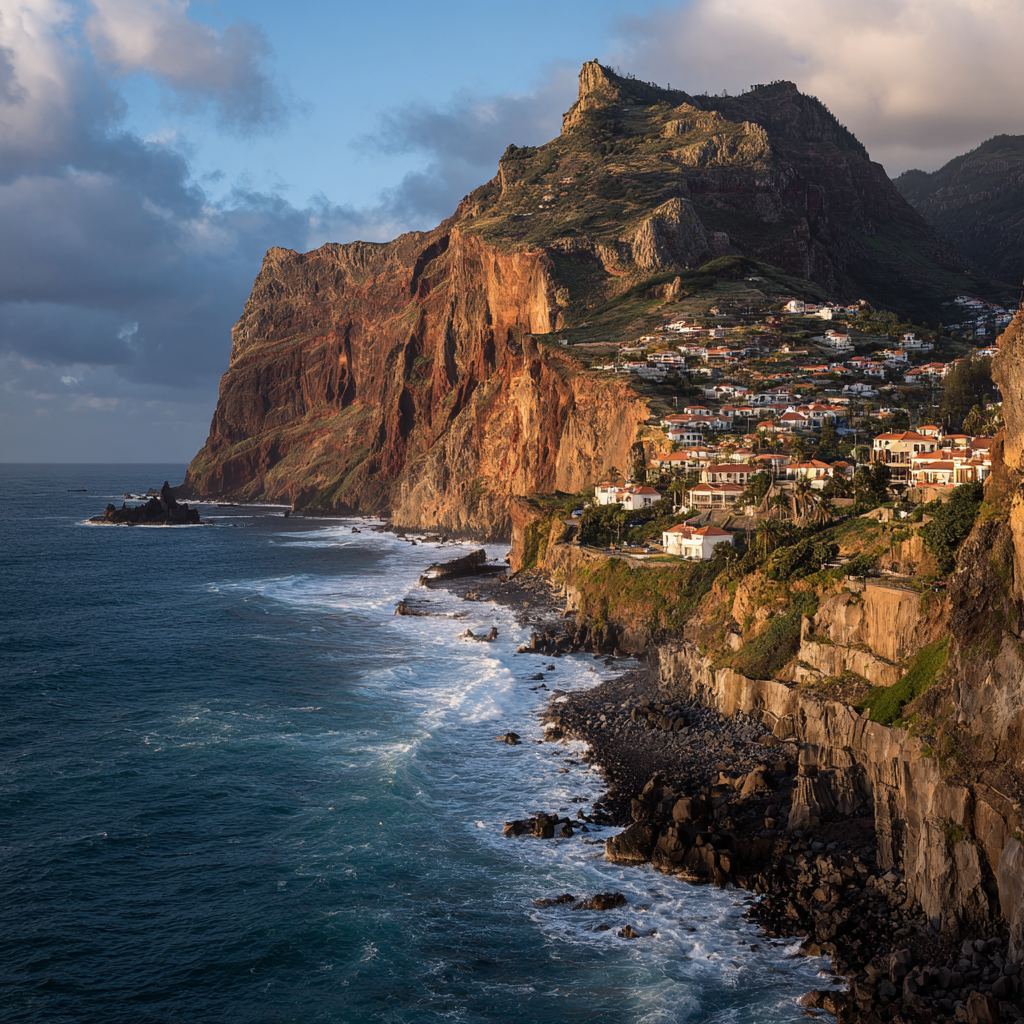
You land in Funchal, the capital, and even from the plane you already get it. Mountains just drop into the sea, and the cliffs look like they’ve been carved with a knife. The air feels heavy and green, full of flowers you don’t recognize. And that smell, a mix of salt and earth and fruit, stays with you everywhere you go.
Madeira is the kind of place that doesn’t really care what month it is. They call it the island of eternal spring, and it’s true. It’s never too hot, never too cold, just the kind of perfect where you think, maybe I could live here. Some people do, for a month or for good, working remotely from cafes that face the ocean. The Wi-Fi is strong, the espresso is strong, and the life tempo is just right.
Mountains That Feel Alive
If you think it’s all beaches and palm trees, you’re wrong. The real Madeira is up there, in the mountains. It’s all about the hikes, the levadas – ancient irrigation channels that cut through jungly hills and connect villages. You walk beside them, sometimes through tunnels, sometimes along cliffs where there’s only a thin metal rail between you and a 300-meter drop. It’s scary and stunning in the same second.
Levada do Caldeirão Verde is one of those trails people whisper about. Six hours roundtrip, waterfalls everywhere, ferns, birds, and air so clean it almost feels fake. You end up soaked, tired, and kind of reborn. Another one, Pico do Arieiro to Pico Ruivo, is like walking on the roof of the island. The clouds move below you, and the light keeps changing every few minutes. It’s not an easy one – bring water, good shoes, and some patience.
Locals hike in jeans, somehow. You’ll meet them, cheerful and sunburned, carrying little bags of fruit and telling you that it’s just a “short walk”. Madeira people always say that. “Short walk,” and then it’s 10 kilometers of steep rock and fog.
Funchal – Small City, Big Heart
Funchal feels like a town that woke up one day and decided to be a city. Everything’s close, colorful, walkable. You’ve got these cobblestone streets with black and white patterns, like someone painted waves on the ground. Cafes are everywhere, and the espresso is about 1 euro.
You’ll see old men in hats sitting by the harbor, watching cruise ships arrive. There’s always music somewhere, maybe from a restaurant, maybe just someone with a guitar by the pier.
The Mercado dos Lavradores is a bit touristy but still worth it. It’s all local produce – bananas, passionfruit, weird hybrids you’ve never heard of. And the fish market downstairs, that’s wild. Huge black scabbardfish with big eyes, caught from deep Atlantic waters. They look like something out of a nightmare but taste amazing, especially when grilled with banana and passionfruit sauce.
Food – Simplicity With Soul
Madeira doesn’t do complicated food. It’s about comfort and freshness. The star dish is espada com banana (the scabbardfish with banana). Sounds strange, but it works. There’s also espetada, chunks of beef on a bay leaf skewer, grilled over open fire. Locals eat it with fried corn cubes and drink poncha, a strong rum drink mixed with lemon juice and honey.
You’ll hear that poncha “kills all bacteria” – that’s what locals say when they pour you a second one. There’s a place called Taberna da Poncha up in Câmara de Lobos where fishermen used to drink after long days. It’s sticky, loud, and perfect.
If you’re more into quiet dining, Funchal has some great new spots too. Restaurant Armazém do Sal is an old salt warehouse turned fine dining place. Then there’s O Tasco, small, simple, but with food that hits deep.
Madeira wine deserves its own book. It’s sweet, old-fashioned, and unforgettable. You taste it once and suddenly you get why sailors used to carry barrels of it across the world. It ages forever, just like the island seems to.
Madeira by Car – Road Trip on the Edge
Driving in Madeira is half fun, half horror movie. The roads are good, but the turns are sharp, and the drops are insane. You’ll be laughing and swearing at the same time.
Rent a small car and go west – Ribeira Brava, Calheta, and Ponta do Pargo. There are tunnels everywhere, cutting through mountains, then suddenly you’re back on the cliff edge, ocean exploding below. Every few kilometers there’s a viewpoint, a miradouro, usually with a small coffee truck and someone selling homemade cake.
Cabo Girão is one of the highest cliffs in Europe, 580 meters above sea level. They built a glass platform so you can look straight down. It’s terrifying, but you can’t not do it.
Then there’s Porto Moniz, a village on the north coast known for its natural lava pools. The Atlantic crashes right into them, sending up sprays of water. On calm days you can swim there, surrounded by black volcanic rock. It’s wild, real, not some polished resort pool.
The north side of the island feels different – greener, mistier, like a lost world. Towns like São Vicente or Seixal still feel untouched. You’ll find small guesthouses with ocean views, and in the morning, it’s just waves and fog.
People, Vibe, and the “Stay a Little Longer” Feeling
Madeirans are friendly in that quiet, real way. They don’t push, they don’t sell. You ask for directions, and they’ll walk you halfway there. You sit in a café, and the waiter remembers your order after two visits.
It’s one of those places that makes you slow down without trying. You start your day with plans, but then you end up watching clouds move or sitting by the ocean for hours doing nothing. And it’s not boring, it’s peaceful in a way that most of us forgot how to feel.
Tourism is growing, sure, but it doesn’t feel overrun. The island still has space to breathe. Even when cruise ships arrive, you can drive 30 minutes and find a quiet trail or empty village.
New Wave – Digital Nomads and Remote Dreamers
In the last few years, Madeira’s been quietly becoming a base for digital nomads. There’s this village called Ponta do Sol, where a project called Digital Nomad Village offers coworking spaces and community events for remote workers. It’s sunny, calm, and way cheaper than Lisbon or Berlin.
You see people working with laptops on terraces overlooking banana plantations. It’s not fake – people actually live here now, for months at a time. Some stay forever.
The local government even supports it, offering programs for long-stay visitors. It’s a smart move. The island gets fresh energy, and people get to live somewhere that still feels authentic.
Nature, Still Untouched
Madeira’s forests are part of the UNESCO-listed Laurisilva – ancient laurel woods that have survived since the Ice Age. Walking there feels like going back in time. Moss everywhere, dripping water, birds calling from nowhere.
One of the best spots is the Fanal Forest. It’s like a dream, especially when the fog rolls in. Twisted old trees, low clouds, light that looks like it came from another planet. People go there just to take photos, but when you stand there alone, it’s almost spiritual.
Even beaches are a bit wild. Most are rocky, but Seixal Beach has black sand that looks like velvet. There’s no big scene, no beach clubs, just waves and kids playing football.
Madeira Isn’t Flashy – And That’s Its Power
Madeira doesn’t try to be trendy, which makes it even cooler. There are no influencers posing every meter (ok, maybe one or two, but still). It’s not about showing off, it’s about feeling.
It’s an island that lets you breathe, think, maybe reset something inside. You wake up to bird sounds, hike till you’re tired, eat, drink, and go to sleep early. And it feels like enough.
When you leave, the smell of flowers stays on your clothes, and the calm stays in your head.
You’ll promise yourself to come back – and most people actually do.