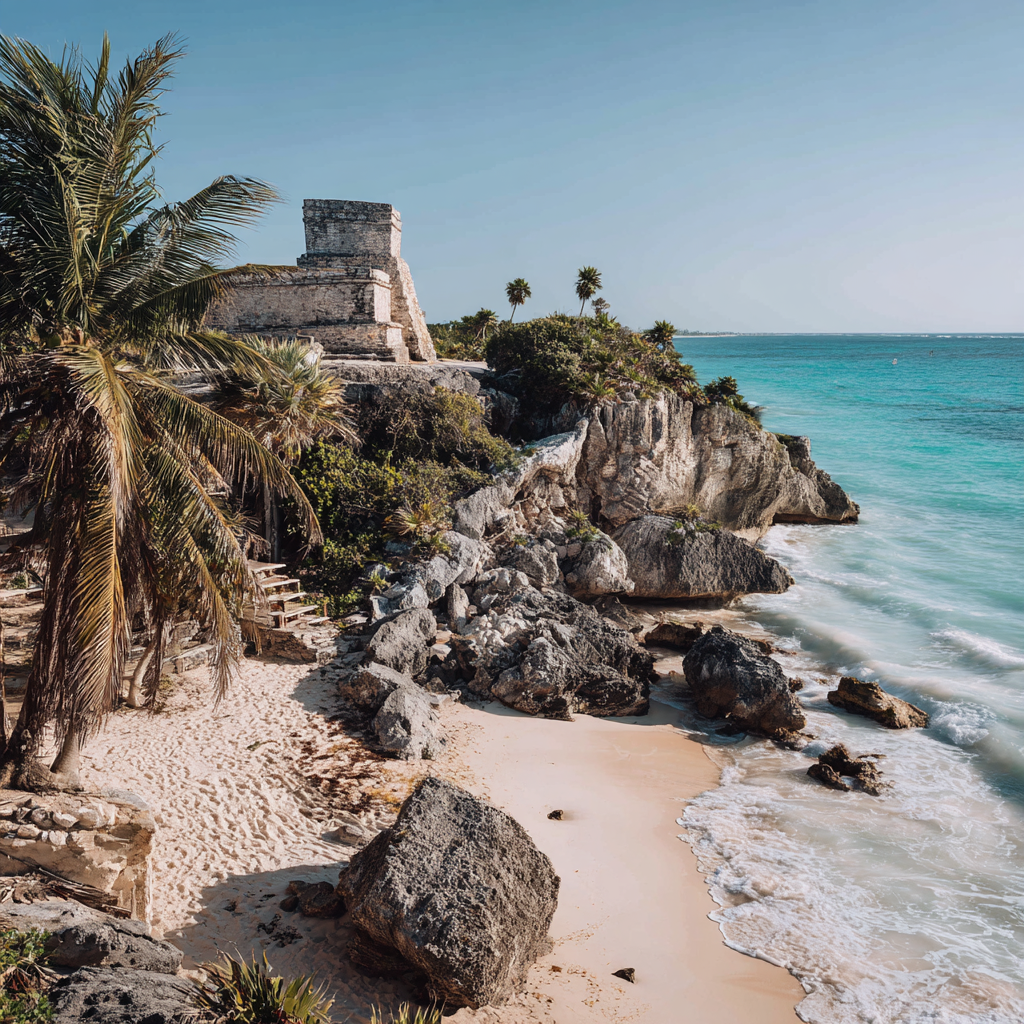
The Beach That Built a Myth
The beach is what made Tulum famous. Wide, white, soft like flour. The Caribbean water glows turquoise even on cloudy days. The hotels are mostly low-rise, hidden behind palms. You’ll find fancy names like Nomade, Be Tulum, Habitas – all promising “eco luxury” that somehow costs more than Manhattan. Still, it’s beautiful.
In the morning, it’s quiet, maybe a few people doing yoga, someone jogging barefoot. By noon, the beach clubs start to hum. DJ sets, cold coconuts, the smell of sunscreen and sea breeze. Sunset is the main event – the whole beach turns golden, and everyone stops to watch. Phones out, drinks in hand, that moment when the sun dips below the horizon and applause breaks out.
But if you walk far enough, past the crowds, there are still quiet corners. Places where the jungle meets the sand, and the only sound is the wind. That’s the Tulum people fell in love with years ago – the one that feels wild and untouched.
The Ruins and the Sea
The Tulum ruins are the city’s heart, perched high above the sea. Built by the Maya, they’re not the biggest or the grandest, but their setting is magic. The stone temples overlook the Caribbean, waves crashing below. It’s one of those views that doesn’t get old, no matter how many people are around.
Come early – like sunrise early – before the crowds and the heat. You’ll see iguanas warming themselves on the stones, hear birds waking up in the jungle. The light hits the ruins just right, golden and soft. You can almost imagine what this place looked like when it was still alive with people and rituals.
There’s a small beach right under the cliff, reachable by stairs. Swimming there, under the shadow of ancient walls, feels unreal. It’s like floating through time.
Cenotes – The Secret Underworld
The real magic of Tulum might actually be underground. Cenotes – natural sinkholes filled with clear, cool water – are scattered all around the Yucatán Peninsula, and Tulum has some of the best.
Gran Cenote is famous, and for good reason. Water so clear you can see the fish from above, sunlight cutting through the surface like glass. You snorkel through caves where bats hang from the ceiling, and you forget the heat for a while.
Cenote Calavera (the Skull) is smaller, more raw. You jump in through a hole in the rock, splash into deep blue silence. There’s something ancient and sacred about it, even with people laughing and taking GoPro videos.
Locals have their own favorites, hidden deeper in the jungle – like Cenote Escondido or Cristal. Bring a bike, a bottle of water, and time. These are the places that make Tulum feel like a secret again.
Food – From Street Smoke to Beach Glow
Tulum’s food scene is wild. You can have a $1 taco or a $150 tasting menu, sometimes on the same street. And honestly, both will probably taste amazing.
In town, the tacos rule. Antojitos La Chiapaneca is legendary – smoky al pastor grilled on the street, bright orange meat, pineapple slices on top, lime and salsa that sting your fingers. It’s open late, full of locals, cheap, perfect.
Then there’s Taqueria Honorio, another cult spot for breakfast tacos and cochinita pibil (slow-roasted pork cooked underground). The line’s long, but no one minds.
On the beach, food gets fancier. Restaurants like Hartwood or Arca cook over open fire, all local ingredients, no freezers. You eat under palm leaves, candles everywhere, the smell of wood smoke and salt. Yeah, it’s pricey, but the experience is something else.
Also, don’t skip the fruit stands. Mangoes, coconuts, papaya – sweeter than candy. And the coffee scene’s solid now too. Ki’bok Coffee in town is a favorite for digital nomads with laptops and strong espresso.
Tulum Town – Real Life Beyond the Hype
Lots of people never make it past the beach road, but the real Tulum lives in town. It’s dusty, loud, full of color and people. Street art everywhere, tuk-tuks zipping by, dogs sleeping in the shade.
There’s a big community vibe here. Locals mix with travelers, artists, expats who came for a week and never left. The cafes are friendly, the prices lower, and you get that sense of everyday life the beach often hides.
At night, bars come alive. Batey Mojito Bar is an icon – old VW Beetle parked out front, live music, mojitos made with fresh sugarcane crushed right at the door. It’s sweaty, fun, and totally unpretentious.
Town’s also where you’ll find small hostels, family restaurants, and the kind of authenticity that feels warm instead of curated.
Jungle Dreams and Night Beats
Tulum isn’t sleepy anymore. It’s become a party destination, but not in the loud Cancun way. It’s more… mystical, tribal, bohemian. Parties happen in the jungle, with art installations, fire dancers, and electronic beats that go until sunrise.
Papaya Playa Project hosts big events on full moons, and places like Vagalume or Gitano mix cocktails with DJ sets and candlelight. It’s stylish but still wild around the edges.
But there’s a split now – between those who come to dance, and those who come to disconnect. You’ll see one group heading to sound baths and meditation retreats, another to nightlong beach raves. Tulum somehow holds both.
Eco or Ego? The New Tulum Paradox
Let’s be honest. Tulum has changed. What used to be a laid-back backpacker spot is now full of influencers and $600-a-night “eco” hotels with air conditioning running 24/7. The word “sustainable” gets thrown around a lot, not always honestly.
Still, beneath the trend and the chaos, the essence is there. The jungle still hums at night. The sea still glows turquoise in the morning. And if you look past the filters, you’ll find locals who care deeply about the land, the cenotes, the culture.
There are small projects doing it right – reforestation, beach cleanups, real eco-lodges that use solar power and compost toilets, not just hashtags. It’s not perfect, but it’s movement in the right direction.
Spirit and Slow Time
The energy in Tulum is different. Some say it’s the magnetic pull of the cenotes, others say it’s just how life slows down here. Whatever it is, it makes people stay longer than planned.
You wake up early, barefoot on the sand, do yoga, swim, drink cold coconut water, and the day somehow stretches wide open. You forget the clock, the inbox, the noise of the world outside.
And at night, when the stars come out over the jungle and the music fades, you feel something almost ancient in the air – like the spirit of the Maya still watching quietly.
Leaving, or Maybe Not
Leaving Tulum always feels like leaving two places – the dream and the reality. The dream of white sand, turquoise sea, endless days. The reality of dust, humidity, crowds, and heat. But somehow both feel honest, part of the same truth.
People say Tulum changed them, and yeah, it sounds cliché, but maybe it’s true. It’s a place that reminds you what beauty costs, how nature and chaos can exist side by side.
You’ll remember the smell of lime and salt on your skin, the sound of waves mixing with drums from some beach bar, the taste of tacos at midnight.
And when you’re back home, scrolling through photos, you’ll miss it – the imperfection, the sun, the feeling of being fully present somewhere that refuses to be tamed.